RLHF for Underserved Languages: A Practical Guide
A plain-English guide to RLHF: how AI models learn from human feedback, why it breaks in languages like Arabic or Swahili, and how to fix it.
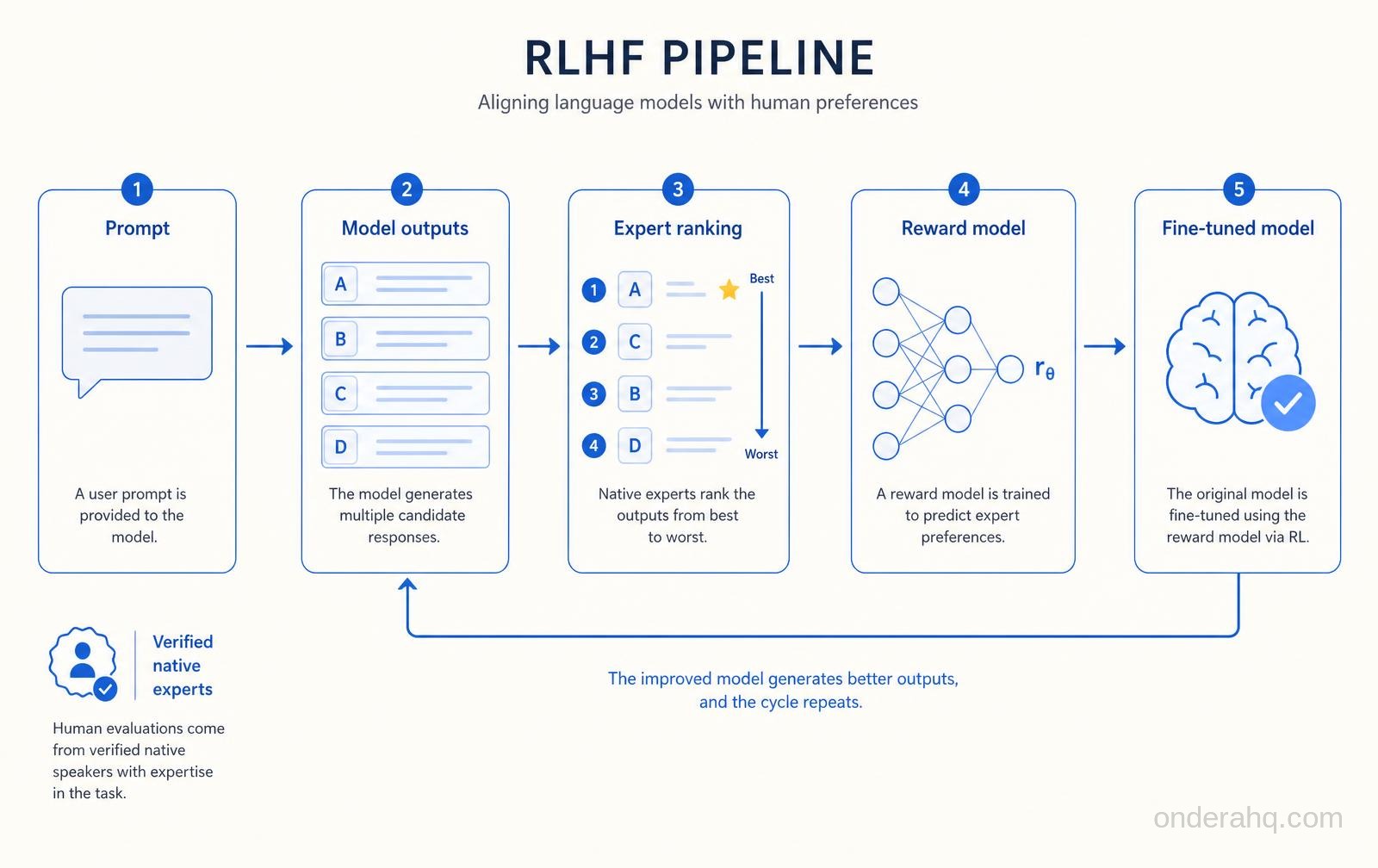
AI chatbots do not magically know what a good answer looks like. People teach them. The method is called RLHF, short for "reinforcement learning from human feedback". It works in three simple steps:
- The AI writes a few different answers to the same question.
- A real person reads them and says which one is best.
- The AI learns from those choices and starts writing more answers like the ones people picked.
That is it. The AI copies the taste of the people who rated it. In English, this process is well funded and well run. In Arabic dialects, Swahili, Amharic, Tagalog, Urdu, Hausa, or Japanese medical language, it usually is not. And the weak spot is almost always the people doing the rating.
Why it goes wrong outside English
If the raters do not really speak the language, or do not understand the topic, they pick the wrong answers. The AI then learns the wrong lesson very confidently. Three things happen again and again:
- Dialects get erased. Raters reward formal textbook Arabic and mark down the Egyptian, Levantine, or Gulf phrasing that real people actually use every day.
- It sounds translated. Answers that read like English wearing a costume get picked over natural, native-sounding ones, because the rater was thinking in English.
- Wrong answers slip through. A fluent speaker who is not a doctor cannot tell if medical advice is dangerous. It sounds good, so it gets rewarded. Sounding good is not the same as being right.
Translating is easy. Judging is hard.
Normal crowd work asks a simple question: is this translation acceptable? RLHF asks a much harder one: between these two good-looking answers, which is more helpful, more truthful, safer, and more natural for this specific audience?
That takes someone who lives in the language and knows the subject. Cheap crowds produce a lot of ratings that disagree with each other, so teams average them out, and the averaging destroys exactly the cultural detail they wanted. A small group of verified professionals gives fewer ratings, but they agree with each other and they are right. Quality beats quantity here, by a lot.
How to do it properly
- Be specific about who you are serving. Not "Arabic", but "Egyptian Arabic, for patients, in plain everyday words".
- Hire verified native professionals. Check licences for medicine, law, or finance. Check that dialect speakers are really from that place.
- Write the instructions in the target language. English-only guidelines sneak English habits back in.
- Test before you scale. Give everyone the same small test set, see if they agree, and coach them until they do.
- Ask them to compare, not just score. "Which of these two is better, and why?" teaches the AI far more than a number out of five.
- Include the awkward questions. How and when an AI should refuse to answer changes a lot from country to country.
- Keep checking. Have a second expert panel re-check a sample regularly, and watch each dialect separately.
What to measure
Track how often your raters agree with each other in each language and dialect, how often expert reviewers overturn a rating, and whether real native users prefer your model's answers. One combined "multilingual score" hides the dialects that are quietly failing. Always break the numbers down by language.
The short version
For underserved languages, better RLHF is mostly a hiring problem, not a technical one. The teams whose models people actually trust in Cairo, Nairobi, Manila, or Tokyo are the ones who paid real verified professionals to make the calls: doctors judging medical answers, lawyers judging legal answers, and native speakers judging how it sounds.